Center for Advanced Drug Analysis
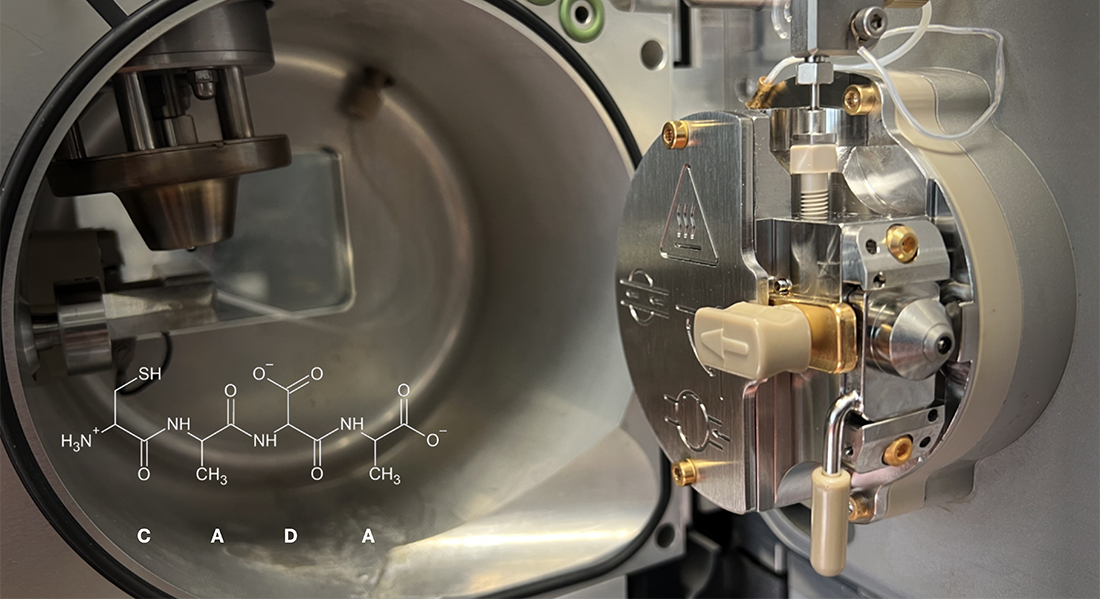
The research groups within CADA are the Pharmaceutical Analytical Chemistry Group, the Drug Toxicology, Metabolism and Analysis and the Protein Analysis Group. CADA also hosts the core facility Analytical Research and Collaboration in Pharmaceutical Sciences (ARCPharm).
Research
Research within CADA spans the full breadth of modern analytical chemistry for analysis of drugs and biomolecules in biological systems
- Improved and integrated sample preparation
- Microfluidics and microscale separation
- Capillary electrophoresis and Taylor dispersion analysis
- Liquid chromatography and mass spectrometry (LC-MS)
- LC-MS of biomolecules and analysis of structure and interactions of proteins
- Analysis of reactive metabolites and bioactive molecules in biological samples
- Mass spectrometry imaging of drugs in tissues
- Inductively coupled plasma mass spectrometry (ICP-MS)
- New detection methods
Education of young scientists in analytical chemistry is a key goal of CADA and staff at CADA are responsible for hosting and teaching courses on analytical chemistry both at the bachelor, master, and PhD level. Furthermore, the research groups at CADA continually host and provide an open cross-disciplinary learning environment for numerous master and PhD students receiving training in modern analytical chemistry.
CADA hosts a monthly seminar to highlight ongoing research work within CADA and foster both scientific and social networks within the broader field of analytical chemistry.
The seminar occurs on the second Friday of the month at 14:30 in the meeting room on the 8th floor, building 13 (Department of Pharmacy). After each seminar, there will be drinks and snacks and people are encouraged to stay longer for social interactions.
At the seminar, exciting highlights from ongoing research within CADA will be presented, in addition to research from invited external speakers.
If you wish to participate or maybe present at the next seminar, or suggest a speaker, please send an email to kasper.rand@sund.ku.dk
Bachelor/master courses we provide:
Quality Assessment of Pharmaceutical Substances (SFAB20025U)
Pharmaceutical Analytical Chemistry (SMPS20006U)
Pharmaceutical Analytical Chemistry (SFAB20035U)
Principles and Practice of Bioanalysis (SFAK20014U)
Biopharmaceuticals: Protein Production and Analysis (SFAB21005U)
Biopharmaceuticals: Protein Production and Analysis (SFAK20005U)
If you wish to enrol in one of these courses, you can find it in the course catalogue for the University of Copenhagen.
PhD courses
You can find relevant PhD courses at Drug Research Academy - PhD courses
Master thesis student projects
Examples of projects
Miniaturised electro-membrane extraction of drug molecules from very small sample volumes
In many experimental scenarios only very little sample volumes are accessible, e.g., when sampling blood/plasma from test animals to investigate and better understand effects and transport of pharmaceutical substances in vivo.
There is a clear need to develop techniques that allow chemical analysis from very small sample volumes, and one promising approach is electromembrane extraction, which allows the extraction of (basic) drugs from various matrices (water, urine, cell medium, plasma, ...).
This can give both a purification of the analyte of interest as well as an upconcentration for further analysis (by, e.g., LC-MS). We provide projects that further develop this technology and use it in the context of pharmaceutically relevant research questions.
No. of students: 1-2
Novel fibre-based liquid chromatography for pharmaceutical analysis
Liquid chromatography (LC) is one of the main workhorses in pharmaceutical analysis and used extensively in industry. The main applied format is reversed-phase liquid chromatography using particle-based apolar stationary phases. One of the main drawbacks is often the large counter pressure generated by columns packed with very small particles.
A different approach could be to use fibres instead of particles and thus achieve similar performance at lower pressures, and potentially faster separation times. This project is highly innovative in exploring the best ways to prepare fibre-based LC columns with different chemical properties and test them under various conditions for the separation of drug molecules and metabolites.
No. of students: 1-2
Immobilised enzyme reactors for fast sample preparations (proteolysis, deglycosylation, capture/enrichment, degradation, …)
Many biochemical processes rely on enzymes (protein digestion, DNA cleavage, removing sugars from proteins, or strong selective capture of important molecules). However, many enzymes are rare and expensive. In order to more efficiently use enzymes, they can be immobilised on appropriate supports, such that they can be re-used again and again for new samples.
This can be done even more efficiently in a miniaturised format, further reducing the amount of enzyme needed and also greatly increasing enzyme turnover by improved molecular transport. We provide projects looking at immobilising a variety of enzymes on a microfluidic support structure and testing their function by LC-UV, LC-MS or CE-UV.
No. of students: 1-2
HILIC-based sample preparation and separation strategies for more hydrophilic drug substances
Solid phase extraction (SPE) is a common method to extract and enrich compounds of interest from a sample. This is often used as a first step in an analysis for determining time-dependent occurrence of drug substances and metabolites in blood/serum/urine samples.
Traditionally, reversed phase chromatographic material is used for SPE, but sometimes this material is insufficient; especially when the task is to capture more hydrophilic molecules. In this project, we are trying to evaluate the use of different types of stationary phases exploiting what is known as hydrophilic interaction liquid chromatography (HILIC). We will test this for sample extraction (SPE) as well as for sample separation (LC).
No. of students: 1-2
Design of in vitro drug release models for predicting in vivo performance of depot injectables
Development of in vitro release models for quality control as well as formulation design purposes is a critical activity in the characterization of parenteral depot formulations. Ideally, an in vitro-in vivo correlation should be established, however, it requires that the drug release mechanism is the same in vitro and in vivo.
The project focuses on characterizing drug release from sustained release formulations for subcutaneous and/or intra-muscular administration. The aim of the project is to develop in vitro release models to achieve in depth understanding of how formulation designs as well as physiological parameters influence drug release mechanism and rate and drug transport the blood capillaries.
No. of students: 1-2
Efficient characterization of peptide and protein-based drugs/new drug modalities
In this project, microscale analytical methodologies (CE, TDA, FIDA) will be developed for biophysical characterization/stability assessment of peptide and protein-based drugs. While these biologics have proven efficient for the treatment of a range of serious diseases, challenges remain with respect to developing and formulating these compounds.
Notably, they are known to be structurally labile and current methods for assessing stability are suboptimal. We take advantage of the fact that structural alterations can be efficiently monitored through size and charge changes, change in optical properties, and/or altered function (binding ability) using microscale fluidic systems. Potential applications: stress testing of mAbs, acylated peptide self-association and ligand binding, detection and self-assembly of endotoxins in injectable, drug-protein binding kinetics.
No. of students: 1-2
Characterization of nanoparticulate drug delivery systems
This project focuses on the development of new methods to characterize nanoparticulate drug delivery systems, e.g., liposomes, cubosomes, nanocrystals. New methods based on capillary electrophoresis, Taylor dispersion analysis and/or microfluidics will be developed.
It is important that the methods require limited amount of sample as nanoparticulate drug delivery systems are usually only produced in small quantities. These methods will allow us to address critical parameters such as incorporation efficiency, release, non-covalent interactions, aggregation, and adsorption.
No. of students: 1-2
Development of forensic methods for the analysis of drugs of abuse
The Section of Forensic Chemistry in Copenhagen has the latest technology in analytical chemistry and is committed to continuously developing and validating new and improved screen and quantitative methods for the analysis of pharmaceuticals, drugs of abuse, and designer drugs in whole blood etc. from traffic, violence, drugging or autopsy cases.
The section has a strong interest in investigations into alternative matrices, such as hair and brain tissue. Some methods are accredited and the field remains of high interest as these alternative matrices offer new advantages; for example, hair analysis allows one to look back in time, because consumed drugs enter the bloodstream and are thereby stored in the developed hair.
The drug will then grow out within the hair, and by segmenting hair into smaller pieces, it is possible to achieve a chemical history of drug use and pattern. These investigations are often developed by use of the sensitive and selective LC/MS/MS technique, thus GC/MS and ICP-MS are available.
No. of students: 1-2
Thesis projects on pharmaceutical analysis with pharma industry, hospital pharmacy, and/or academic-public institutions
Ask for current possibilities.
Application procedure and dates
If you are interested in writing your thesis with the Pharmaceutical Analytical Chemistry Group, please write an email to jesper.ostergaard@sund.ku.dk, jorg.kutter@sund.ku.dk, nickolaj.petersen@sund.ku.dk, or susan.larsen@sund.ku.dk with more information about you. There is no deadline.
Endocrine disrupting pharmaceuticals – how pharmaceuticals affect endocrinology
Pharmaceuticals are the xenobiotics that modern humans are by far most widely exposed to. However, several pharmaceuticals are known to exert side-effects on the endocrine system, with a potential to affect growth and reproduction.
In the DTMA group, we study the mechanisms by which pharmaceuticals affect the endocrine system. Our focus is on the steroidogenesis, the main pathway synthesizing steroid hormones including sex steroids. This pathway is well known to be targeted by many pharmaceuticals.
We use in vitro, ex vivo as well as in vivo and analytical chemical techniques to obtain a better understanding of the fundamental endocrine system, and how this system is affected by pharmaceuticals during therapy. We mainly focus on effects and diseases associated with the reproductive cycle of women, including infertility, migraine, Idiopathic Intercranial Hypertension and Sjögren´s syndrome. The aim is to provide better treatment for these diseases with fewer side effects. Thus, clinical collaboration is a key element in our research.
Danida projects: Antimicrobial resistance in low to middle-income countries – impact on human livelihood
Antimicrobial resistance (AMR) is one of the biggest threats to public health. The WHO regards AMR as a global health and developmental threat resulting in the loss of millions of lives and AMR is expected to increase significantly in the future. Unintentional exposure to antibiotics through food is the most critical route for human acquisition of AMR, but AMR also spreads between patients in clinical settings.
We investigate how antibiotic use promotes development of resistance in the general public and in patients with infections. Using LC-MS/MS methodology, we investigate unintentional exposure to antibiotics drugs through food and drinks. We also analyse the antibiotic content of food, drinks and herbal medicines along with analysis of antibiotic content in orthodox medicines. The aim is to understand how humans are unintentionally exposed to antibiotics, and how this promotes bacterial resistance.
AMR disproportionally affects people in developing countries, and all our work is therefore conducted in Africa. Currently, we have a project on AMR in Kenya, but we are also active in other African countries such as Ghana, Tanzania and South Africa.
Analysis of the structure and dynamics of biopharmaceuticals |
|
Analysis of the primary and higher-order structure of protein-based drugs is critical for both understanding molecular action as well as monitoring and comparing drug product quality. |
|
No. of students: 1-2 |
Understanding the binding of drugs to target proteins of the human body |
|
HDX-MS is a very sensitive method to study the binding of small molecule ligands or large protein-based drugs to naturally occurring protein receptors in great detail. By performing HDX-MS of the protein receptor in the absence and presence of a single or a panel of potential ligands, we can map the binding site of ligands on the protein receptor and study the structural effects of binding. In this project, you will use |
|
No. of students: 1-2 |
Coupling microfluidics and mass spectrometry for improved analysis of proteins |
|
MS analysis of proteins requires specialized sample treatment and advanced analytical techniques as they are large and complex and often contain modifications (e.g. glycosylations, disulfide bonds). We are exploring the use of microfluidic chips to perform rapid and automated preparation of protein samples for MS analysis. You will learn how to implement protein chemistry and sample processing on a microfluidic chip coupled to MS. |
|
No. of students: 1-2 |
Understanding the functional impact of engineered oligomeric antibodies |
|
Immunoglobulins, also known as antibodies, are an important class of proteins frequently used as biotherapeutics. In the body, immunoglobulins can be found as several types and subclasses. |
|
No. of students: 1-2 |
Application procedure and dates
If you are interested in writing your thesis with the Protein Analysis Group, please write an email to kasper.rand@sund.ku.dk with more information about you. There is no deadline.
Associated Researchers
| Name | Title | Phone | |
|---|---|---|---|
| Search in Name | Search in Title | Search in Phone | |
| Abdelrahman Hassan | Visiting PhD Student | ||
| Alma Hudlebusch | Master Thesis Student | ||
| Ammrin Yasmin Ahmed | Laboratory Coordinator | +4531531511 | |
| Anan Yaghmur | Professor | +4535336541 | |
| Andreea Neamtu | Master Thesis Student | ||
| Anna Thu Hoai Nguyen | PhD Fellow | +4535325967 | |
| Anton Berg Hansen | External, Ph.d Student | +4524499708 | |
| Aryane Faraz | Master Thesis Student | ||
| Ayla Adel Sleiman Amin | Laboratory Technician | +4535334832 | |
| Azra Arifi | Master Thesis Student | ||
| Benjamin Thomas Walters | External | ||
| Bente Gammelgaard | Emerita | +4535336415 | |
| Bjarne Styrishave | Professor | +4535336265 | |
| Camilla Jensen | Laboratory Technician | +4535336416 | |
| Caroline Kim | Master Thesis Student | ||
| Catharina Margrethe Lerche | Associate Professor | +4521470444 | |
| Chenyang Wu | PhD Student | ||
| Christian Janfelt | Associate Professor - Promotion Programme | +4535336557 | |
| Christian Schönbeck | Teaching Associate Professor | +4535324954 | |
| Christina Kamp-Jensen | PhD Student | ||
| Claus Cornett | Associate Professor Emeritus | +4535336266 | |
| Dion Dehghani | Master Thesis Student | ||
| Else Holmfred | Postdoc | +4535331932 | |
| Emilie Hartvig Østergaard | Master Thesis Student | ||
| Emma Nonbo | Master Thesis Student | ||
| Freja Nesbit | Master Thesis Student | ||
| Habibullah Jan | PhD Student | ||
| Hannah Grønbech Kolberg | Research Assistant | ||
| Huiling Mu | Associate Professor | +4535336187 | |
| Ilenuta-Simina Cuciurean | Visiting Student | +4535337389 | |
| Jeehand Hasil | Master Thesis Student | ||
| Jennifer Anton | Student | ||
| Jesper Østergaard | Professor | +4535336138 | |
| Jimmi Dolleris Gabrielsen | Laboratory Technician Trainee | +4535322852 | |
| Jonatan Riber Granborg | Guest Researcher | ||
| Jordan Thomas Aerts | Postdoc | +4535330974 | |
| Julia Yee Nam Cheung | Master Thesis Student | ||
| Jörg P. Kutter | Professor | +4535320399 | |
| Kamille Celica Staack | Master Thesis Student | ||
| Kasper Dyrberg Rand | Professor | ||
| Kenneth Munk Pedersen | Laboratory Technician | +4535336471 | |
| Kirsten Sofia B Ernstsdóttir | Master Thesis Student | ||
| Labiqa Rana Mirza | Master Thesis Student | ||
| Lauritz Falkow Brorsen | Guest Researcher | ||
| Lea Lindeburg | Master Thesis Student | ||
| Leïla Dos Santos | Guest Researcher | +4535331122 | |
| Marie Johanne Møller-Pedersen | Master Thesis Student | ||
| Maryama Balal Mohamed Cusman | Master Thesis Student | ||
| Mathilde Forsberg Bødker | Master Thesis Student | ||
| Mia Danielsen | Postdoc | +4535333921 | |
| Mie With Nielsen | Master Thesis Student | ||
| Nickolaj J. Petersen | Associate Professor | +4535336184 | |
| Omid Rouhi | External, Ph.d Student | +4535324986 | |
| Peter Schiebler Andreasen | Master Thesis Student | ||
| Polina Zhdanova | PhD Fellow | ||
| Revati Abhijit Kulkarni | Master Thesis Student | ||
| Rita Wulff Rasmussen | Laboratory Technician | +4535335349 | |
| Samira Shams Turkmani | Master Thesis Student | ||
| Sham Mazen Ayrouta | Master Thesis Student | ||
| Simon Løv Thomsen | Visiting PhD Student | ||
| Sofia Zerva | PhD Fellow | +4535327713 | |
| Stefan Stürup | Associate Professor | +4535336284 | |
| Stig Pedersen-Bjergaard | Professor | +4535336226 | |
| Susan Weng Larsen | Associate Professor | +4535336198 | |
| Susanne Hermansen | Laboratory Coordinator | +4535336469 | |
| Tanja Lylloff | Visiting PhD Student | ||
| Thomas Fanøe Trap | Master Thesis Student | ||
| Tingting Chen | Master Thesis Student | ||
| Valeria Vladimirovna Gancho | Master Thesis Student | ||
| Vandana Kaushal | Guest Researcher | +4535333195 | |
| Vibe Søndergaard Møller | Master Thesis Student | ||
| Victor Cheng Yin | Assistant Professor - Tenure Track | +4535333569 | |
| Yingyu Liang | Master Thesis Student | ||
| Zahra Babaie | PhD Fellow | +4535324946 | |
| Ziyang Mao | PhD Student |