
Our new professor in regulatory science: Nikolai Brun
October 9, Nikolai Brun gave his inaugural lecture here at Pharma. The title of the lecture was “Regulating drug development in the age of real-world data and AI”.
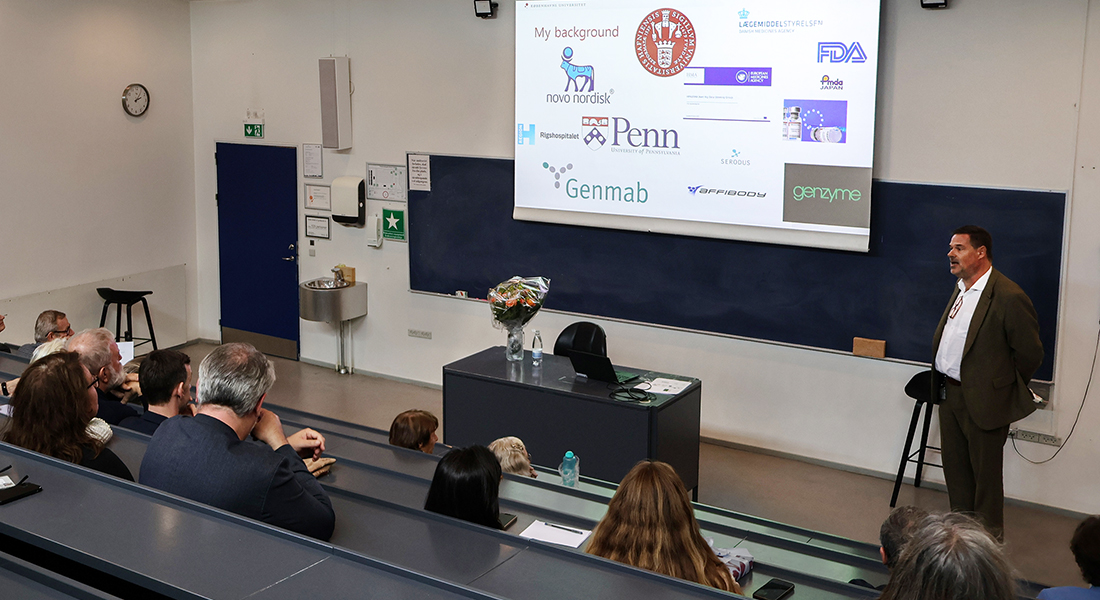
After the lecture, we celebrated the new professor with a reception in Atrium.
Below, Nikolai Brun explains his research and visions further:
What is the focus for your research?
“My research focuses on how society can evaluate and regulate new medicines safely and efficiently in an era of artificial intelligence, advanced therapies, and large-scale health data. Today's regulatory systems were largely developed for conventional medicines, but new technologies increasingly combine drugs, diagnostics, medical devices, and AI into integrated therapeutic systems. I study how real-world health data and AI can be used to improve drug development and regulatory decision-making while maintaining public trust, patient safety, and scientific rigor. This is something I began studying already while at the Danish Medicines Agency together with good colleagues at the EMA. The goal is to help ensure that innovation reaches patients faster without compromising quality or evidence”.
Which current projects or collaborations are you part of?
“At the Copenhagen Centre for Regulatory Science and Real-World Studies (CORS2), I work with academic partners, regulators, healthcare professionals, and industry on projects involving real-world data, AI, and the regulation of innovative therapies. A major focus is exploring how health data collected during routine clinical care can complement traditional clinical trials. Another area is the development of regulatory "sandboxes" that allow novel technologies to be evaluated under controlled conditions before broader implementation. We are also studying how regulatory frameworks can adapt to increasingly complex products that combine medicines, diagnostics, medical devices, and AI”.
Describe some of the important challenges that regulatory science is handling today.
“Regulatory science is facing several major challenges simultaneously. Artificial intelligence is beginning to influence both drug development and regulatory assessment, raising important questions about transparency, reliability, and trust. Real-world health data may help accelerate development and generate evidence more efficiently, but robust methods are needed to ensure valid conclusions. At the same time, new therapies increasingly combine medicines, devices, diagnostics, and software, creating products that do not fit neatly into traditional regulatory categories. Finally, medicine shortages and vulnerabilities in global supply chains have highlighted the need for more resilient healthcare systems”.
What are your visions for your research in CORS2? What are you hoping to achieve?
“My ambition is to help position CORS2 as an internationally recognized center for regulatory science research. I hope we can contribute methods and evidence that allow regulators to make better use of real-world data and AI while preserving the high standards that patients expect. More broadly, I want to help develop regulatory approaches that are agile enough to accommodate future innovations without sacrificing safety, transparency, or scientific quality. Success would mean that new and effective therapies reach patients faster, healthcare systems become more resilient, and Denmark remains a strong contributor to international regulatory science”.