
Developing a new research area: amorphous engineering
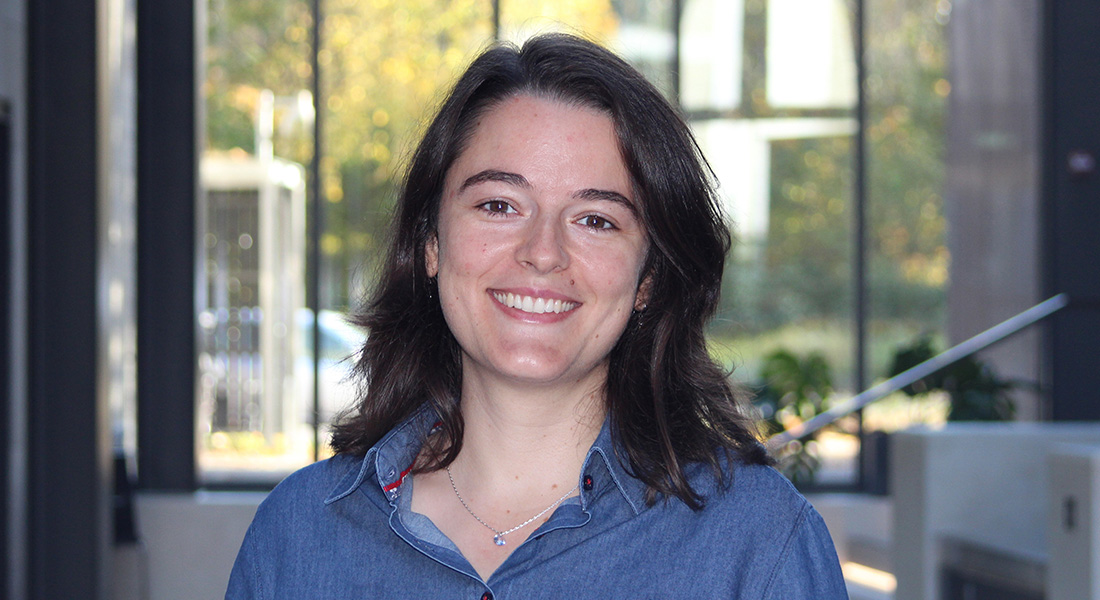
The grant supports the development of a new research area and research group in amorphous engineering through the project “DISCO – Disorder in confined spaces: From molecular stabilization to amorphous drug formulation” at the Department of Pharmacy, University of Copenhagen, marking a significant step in advancing a long-term scientific vision.
Rather than supporting a single project, the Semper Ardens Accelerate grant provides funding for the consolidation of an independent research group and research environment. For Inês, the grant builds on several years of focused research and supports the continued development and strengthening of her emerging research direction.
“Receiving this grant, together with the Inge Lehmann grant I received last year, gives me the scientific independence and resources to establish amorphous engineering as a new research field at the Department of Pharmacy. It enables me to build a research group addressing fundamental scientific questions and to translate those insights into better medicines for patients,” she says.
From Solubility Challenges to a New Scientific Framework
More than 90% of small-molecule drug candidates suffer from poor aqueous solubility, resulting in low and variable bioavailability. Although drugs are often formulated in crystalline form to ensure stability, this structural order frequently exacerbates solubility limitations. Amorphous drugs, in contrast, can offer substantially higher solubility, but their use has been constrained by physical instability and a tendency to crystallize.
In recent work led by Inês in Copenhagen, this long-standing challenge has been approached from a new perspective. Her group has demonstrated that a single drug can exist in multiple amorphous states (polyamorphs), each with distinct stability and solubility properties. This finding challenges the conventional view of amorphous disorder as a “single state” and points towards the possibility of engineering disorder in a controlled manner.
DISCO: Disorder in Confined Spaces
The newly funded project, DISCO – Disorder in confined spaces, builds directly on this insight. The project introduces a structure-based strategy in which amorphous drugs and their polyamorphs are confined within biocompatible micro- and nanoparticles, such as calcium phosphate materials found naturally in bone and teeth.
By introducing true spatial confinement rather than relying on conventional polymers and excipients, DISCO aims to suppress crystallization while preserving the solubility advantages of the amorphous state. Early results, including the stabilization of poorly soluble drugs such as ivermectin, point to a promising research direction at the interface of pharmaceutical materials science and molecular dynamics.
“DISCO allows us to move from passive stabilization strategies to an active, structure-based control of disorder at the molecular level,” Inês explains.
Building a Research Group and a Field
The Semper Ardens Accelerate grant builds on the Inge Lehmann grant that Inês received last year from Independent Research Fund Denmark. Together, these grants create the conditions for further developing amorphous engineering at the Department of Pharmacy, supporting the gradual expansion of a research group and the strengthening of international collaborations.
The DISCO project also benefits from vital international partnerships. Professor Jörg Huwyler (University of Basel, Switzerland), an expert in drug targeting with particulate carriers, and Professor Yaroslav Khimyak (University of East Anglia, UK), an expert in solid-state NMR, provide access to advanced experimental techniques, broadening the scientific scope and reinforcing the international dimension of the research group.
Through DISCO, Inês aims to generate new fundamental insights into the behavior of amorphous drugs in confined environments, helping to inform future formulation strategies for compounds where poor solubility remains a major challenge. Rooted in fundamental science, the project reflects a long-term perspective: that improved understanding of disorder and confinement may help address enduring questions in pharmaceutical materials science and, over time, support the development of more effective medicines.